 Robine Studio
For iPhone and iPad
Your rig, your teacher, your practice room.
Robine Studio is a music studio for guitarists and singers: a guitar rig simulated down to its circuits, lessons with scrolling tablature, a voice coach, a backing guitar and the tools to learn the neck. Plug in, play, sing.
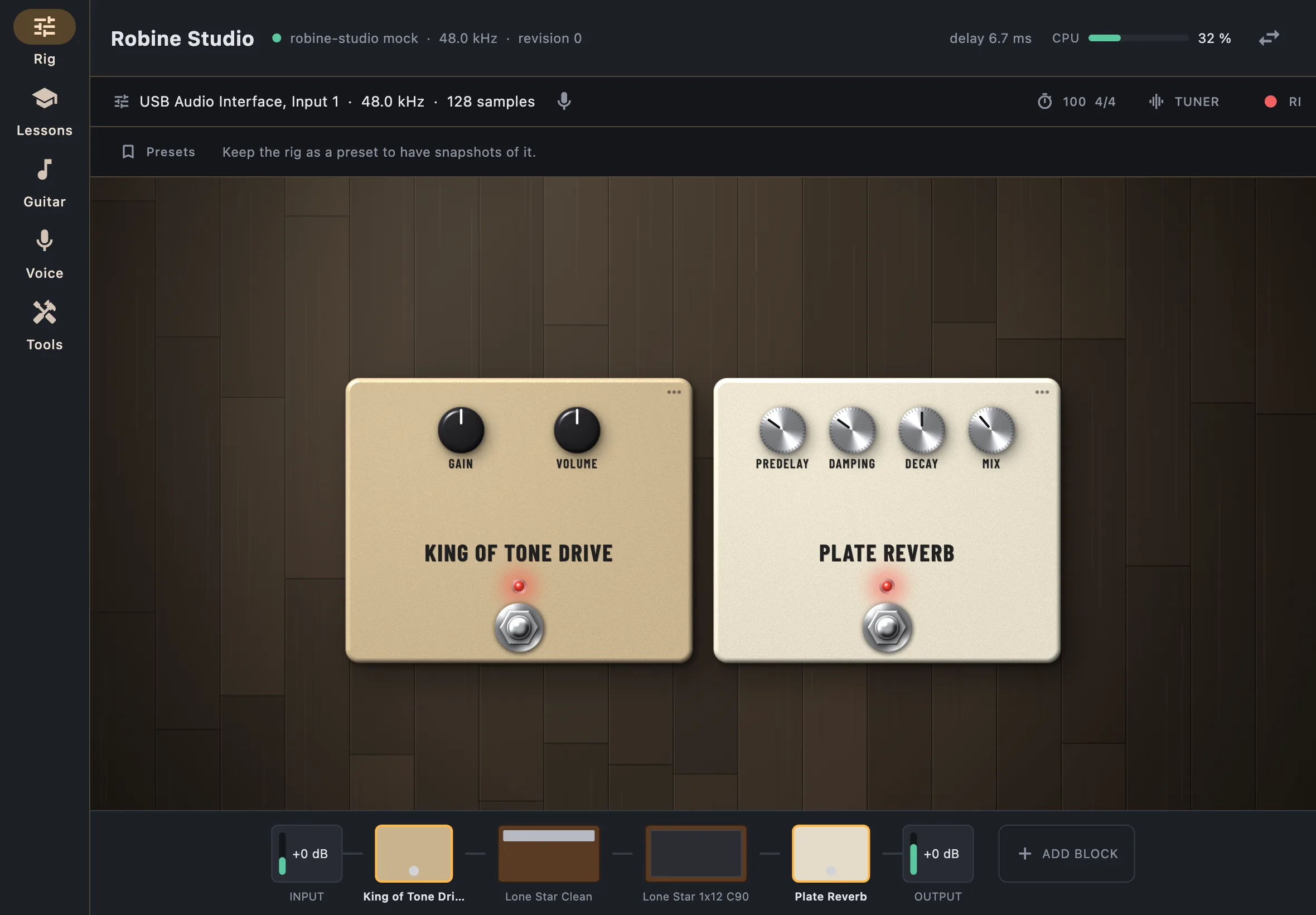
- RigPedals, amplifiers, cabinets, looper
- LessonsTheory and timed workouts
- GuitarA backing guitar on your chords
- VoicePitch, takes, references, ear training
- ToolsFretboard, circle of fifths, tuner, metronome
The rig
A whole rig, built like the real thing.
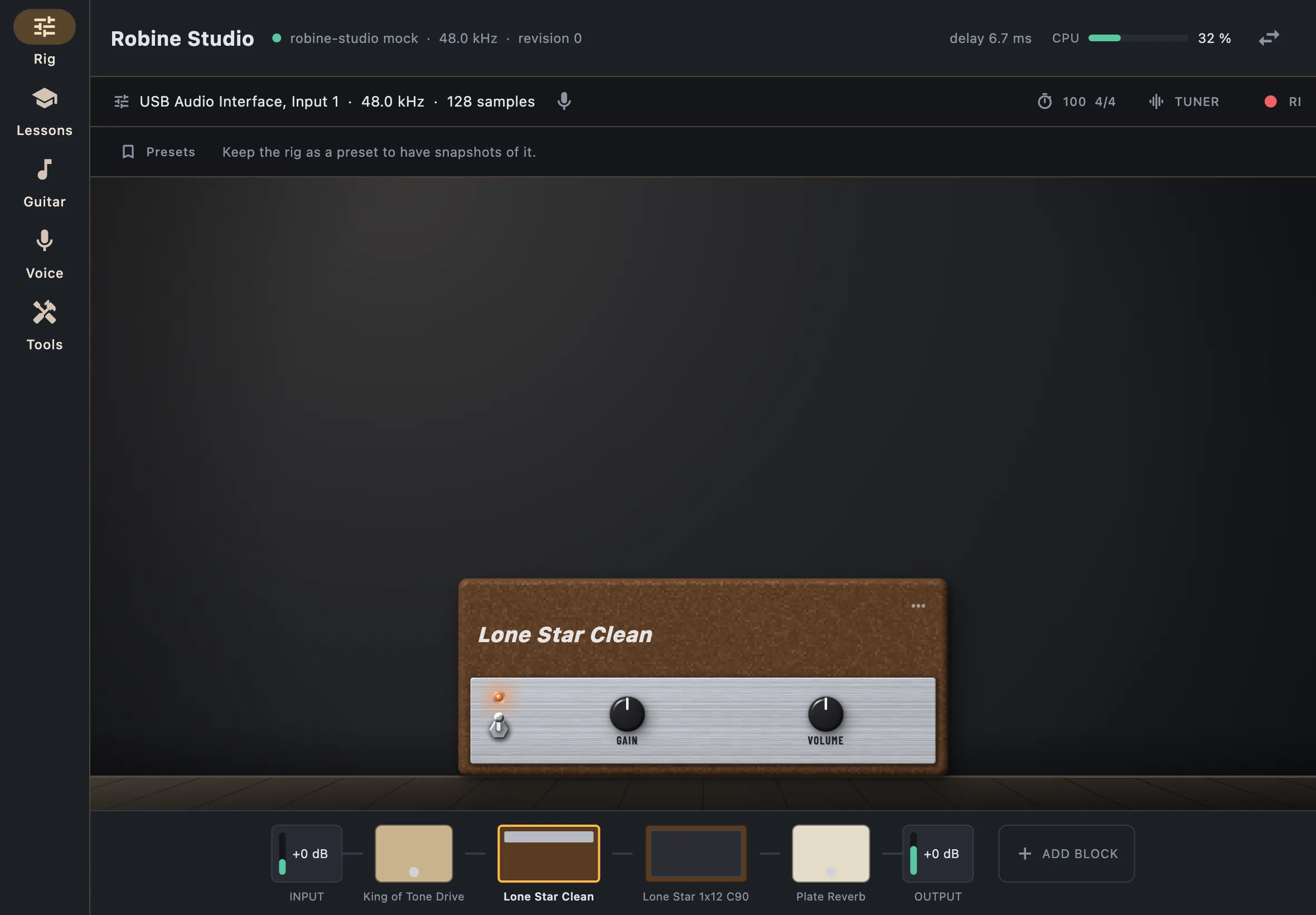
Pedals simulated down to their circuits, amplifiers captured from real ones, cabinets in stereo and a four-track looper. Drag the blocks in the order you like, keep your sounds as presets and switch between snapshots with one tap.
Lessons
Learn, then practise against the clock.
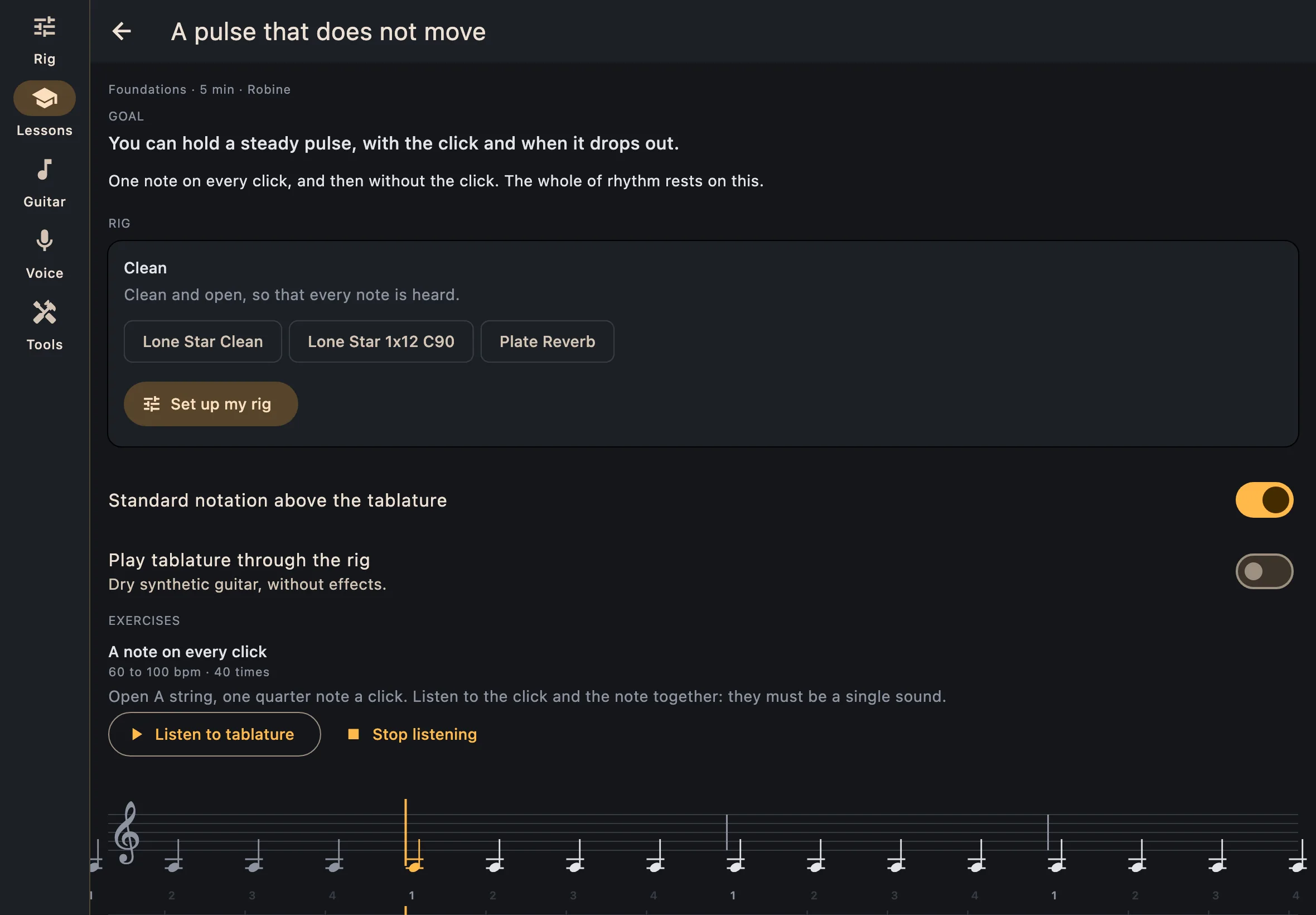
Theory lessons you can play with, and timed workouts where the tablature scrolls with the metronome, the tempo rises as you get it, and the rig sets itself up for the exercise.
Voice
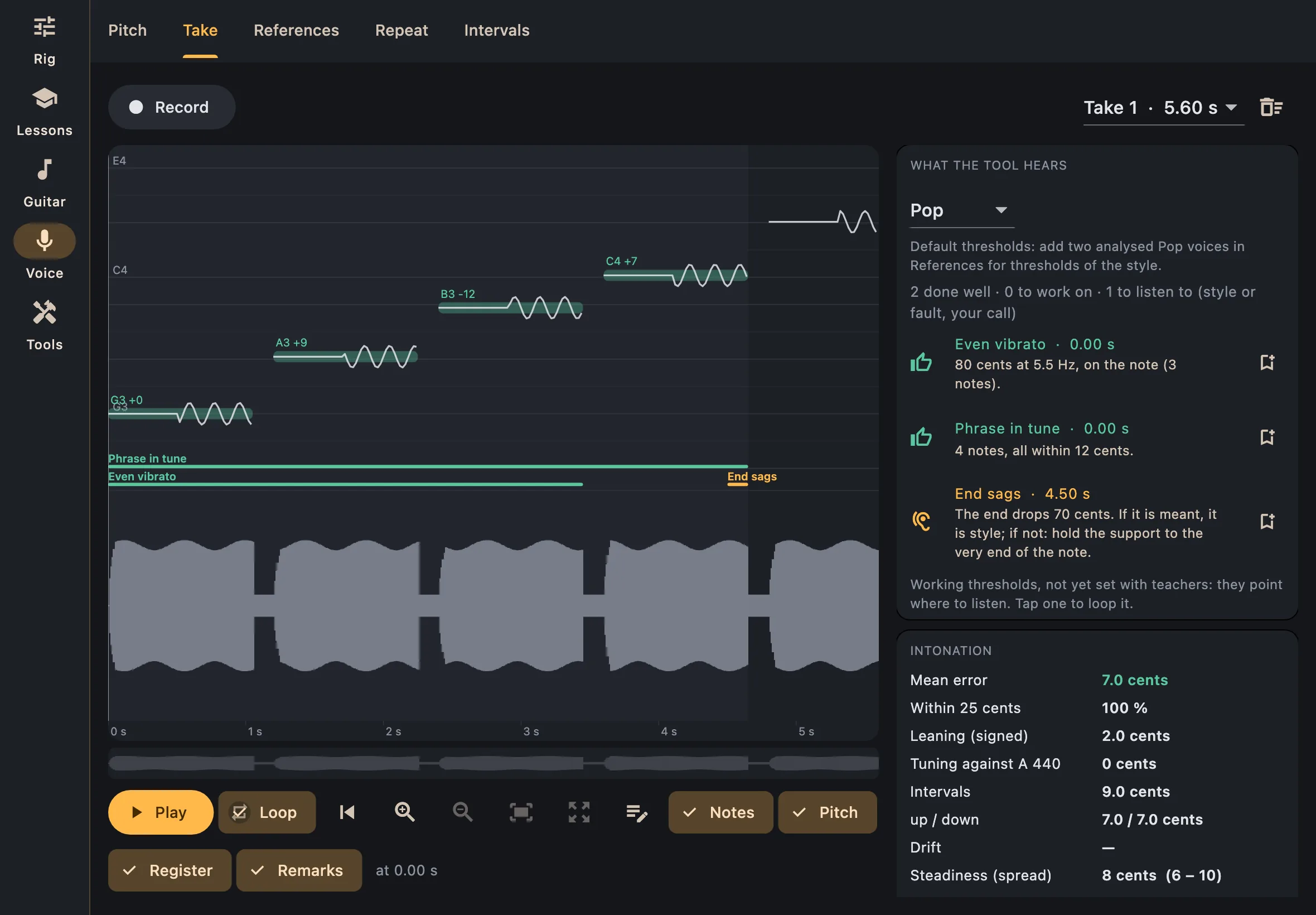
A coach that listens to how you sing.
See your pitch as you sing. Record a take and have it analysed note by note: intonation, vibrato, attacks, the ends of phrases. It says what went well, what to work on, and what may be style: measured against the singers you choose as references.
The neck
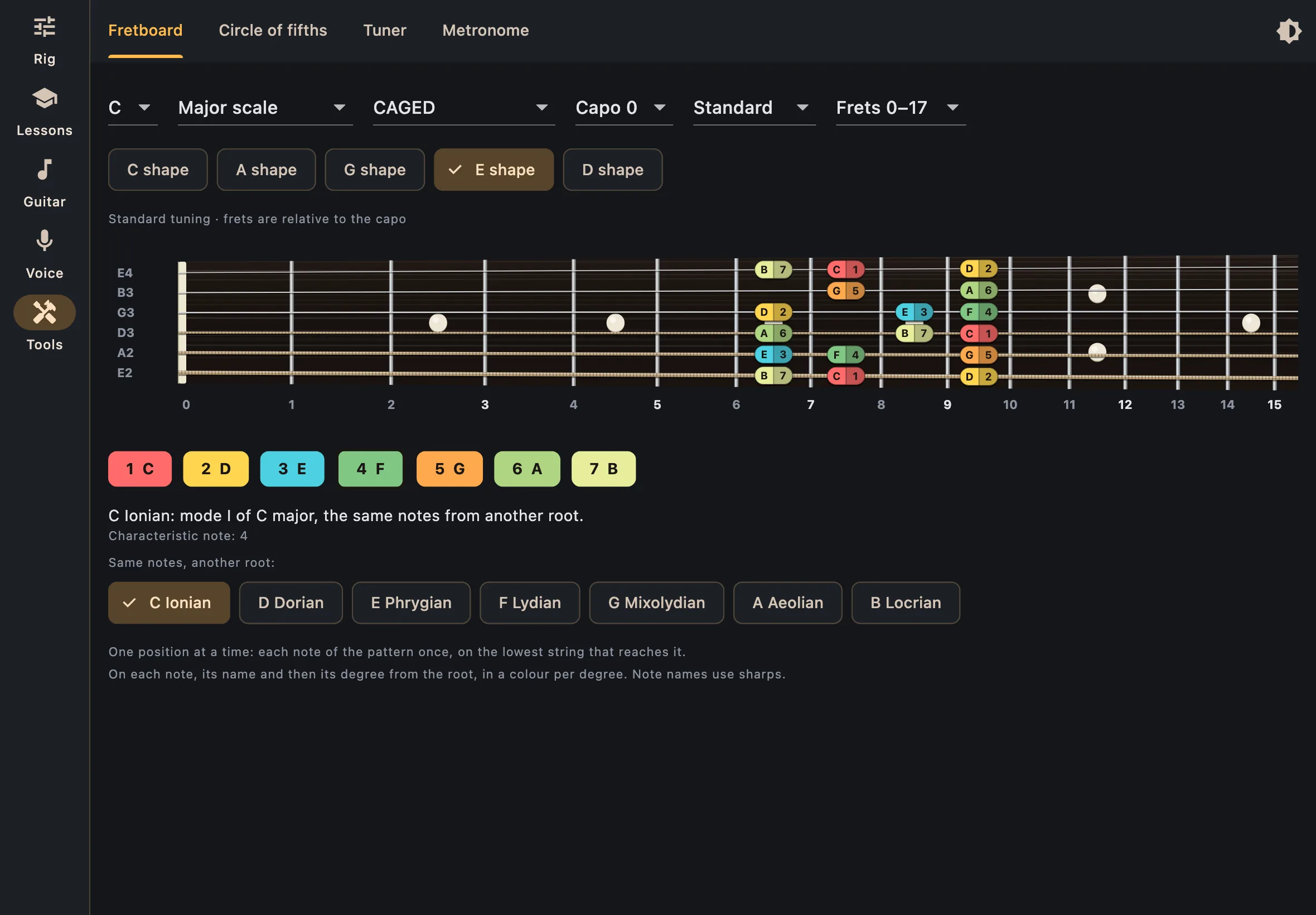
Scales, modes and positions, on your guitar.
Every scale and mode on the neck, one CAGED shape or three-notes-per-string position at a time, in any tuning and with a capo. Change the mode and watch the same notes move their root.
And everything around it
A backing guitar
Type a progression, Am | F | C | G, and a guitar plays
it, dry or through your rig. Save it as MIDI.
Ear training
Sing back a phrase note by note, or sing the intervals asked from a note.
Tuner and metronome
Always one tap away. The metronome can leave clicks out so you learn to keep time on your own.
Made for low latency
Buffers down to 32 samples, and your audio interface is picked out of the inputs by itself.
The looper
Layer until the room is full.
Four tracks, one button each. Record, close the loop, overdub, and let tracks of different lengths drift against each other. Put the looper before the amplifier to reshape what you played, or after it to keep it as it sounded.